
• Blog
  • Services
    • PHIshMD Ongoing Training
    • HIPAA Compliance
    • Discover Vulnerabilities to Patient PHI
  • Store
    • HIPAA Secure Now Service Store
  • Contact Us
    • Sales Inquiry
    • Customer Support
  • Resources
    • Free Healthcare Security Check Up Quiz
    • HIPAA Compliance Requirements | A Guide
    • Webinars & Downloadable Content
    • Use our free Breach Cost Calculator
    • HIPAA Secured Seal
    • In-Email Training & Analysis | Catch Phish

Call us at: 877-275-4545

Client or Partner? Login here
Health Secure Now!Health Secure Now!
  • Blog
  • Services
    • PHIshMD Ongoing Training
    • HIPAA Compliance
    • Discover Vulnerabilities to Patient PHI
  • Store
    • HIPAA Secure Now Service Store
  • Contact Us
    • Sales Inquiry
    • Customer Support
  • Resources
    • Free Healthcare Security Check Up Quiz
    • HIPAA Compliance Requirements | A Guide
    • Webinars & Downloadable Content
    • Use our free Breach Cost Calculator
    • HIPAA Secured Seal
    • In-Email Training & Analysis | Catch Phish

Fall prevention strategies apply to anti-phishing efforts

October 16, 2017 Posted by Art Gross Security Training No Comments

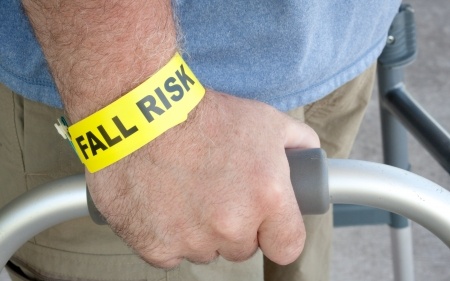
Patient falls have been a serious problem in hospitals and other healthcare facilities for years. In fact, in January 2013 the Agency for Healthcare Research and Quality set out to help reduce the number of falls in healthcare facilities by commissioning a RAND Corporation/ Boston University School of Public Health Report. The report, titled “Preventing Falls in Hospitals: A Toolkit for Improving Quality of Care” lays out a great deal of information regarding falls in hospitals as well as strategies for reducing the number of victims. An article on Healthcare IT News takes the Toolkit and applies it to the pandemic of email phishing attempts by cybercriminals.

According to the report, an alarming number of individuals (700,000 to 1,000,000 to be more specific) would be a fall victim in a hospital during the year of 2013.

What followed was an intense period of staff education and awareness training, monitoring of falls risks, implementation of numerous fall prevention programs, and development of countless resources to focus on fall risk.”

A project coordinated by the American Hospital Association’s Health Research and Educational Trust found that in 325 participating hospitals across 31 states, there was a 6 percent relative risk reduction in the number of falls following the awareness training, fall prevention programs, etc.

Despite contradictory claims that falls actually increased from 2013 to 2016, this article is set out to focus on the benefits of the Toolkit and how it reduced falls in hospitals, so one should assume there was a true reduction in the number of falls.

The link between EHR corruption and email

Phishing (and now “spearphishing” or “whaling”) are the most easily and commonly exploited vulnerabilities in systems, with the average time between the target receiving the contaminated email and clicking on the attachment being two seconds according to statistics cited by the FBI in meetings.”

How can we use the knowledge learned from the fall prevention Toolkit to promote anti-phishing efforts?  Below are some top strategies from the Toolkit, which are applicable to reducing the number of successful phishing attempts made by cybercriminals.


Support from organizational leadership is necessary to promote change

While email attachments provide a convenient way to share documents and attachments among your organization, you cannot send out attachments on a consistent basis and expect your employees to follow the rules of “do not open email attachments”.

Creating a document center where your organization can share documents is a great solution to sending this information via an email attachment. It may be helpful to summarize the document in the email, but refrain from sending anything as an attachment as often as possible.


It’s a people problem

Since employees are often the cause of a data breach and their behavior is not easily changed, it is crucial that they find a way to convince themselves not to click on a phishing email.

Some ways for encouraging employees to look out for phishing emails include advising them to report suspicious behaviors, provide an emergency line in the event they did click on a phishing email and reward them for responding favorably to training.


Test strategies  

Even if you have a flawless procedure in place, if it’s not used, it will be unsuccessful. Creating procedures that can be used universally across your organization will be helpful in ensuring your strategies are understood.

To test your email compliance strategy, it will be necessary to send internal phishing attempts to see which employees are complying with your procedures. You may also want to try spear-phishing to see just how closely your employees are paying attention!


Monitor Email

Blocking personal email accounts on work computers is very beneficial and is very important to ensure PHI is never sent out from a personal account. Monitoring compliance with email procedures will also go a long way in protecting your organization.


Training is vital

Training is key in ensuring your employees know and understand the do’s and don’ts. Using different approaches such as online and in-person training may be beneficial in keeping your employees engaged.


Attitudes towards solving the problem must change

It’s possible that employees feel no matter how prepared they are, successful phishing attempts will still sneak through the cracks. It is important to have a program with training, auditing, verification/testing and disciplinary actions to remind employees that problem must be solved.

Tags: PhishingSecurity Training
No Comments
Share
1

You also might be interested in

Introducing HIPAA Secure Now!

Feb 13, 2011

We are proud to announce the launch of the HIPAA[...]

Employee training might produce the best security ROI

Employee training might produce the best security ROI

Feb 21, 2011

There are countless security products on the market today. You[...]

Using patient record security as a competitive advantage

Using patient record security as a competitive advantage

Mar 7, 2011

The following blog was written a year ago but the[...]

Leave a Reply Cancel Reply

Recent Posts

  • Annual Business Checkup
  • The Future of Healthcare Cybersecurity: Trends to Watch
  • How to Handle a Breach
  • A Dynamic Duo: Cybersecurity and Compliance
  • Elements of a Comprehensive HIPAA Annual Training

Recent Comments

  • Art on Maintaining HIPAA-Compliant Communication Amongst Colleagues
  • Michell Holmes on Maintaining HIPAA-Compliant Communication Amongst Colleagues
  • campusmedicine important source on You Can Leave a Message – But Make Sure It Is HIPAA Compliant
  • Milan on PHI or PII – What’s the Difference?
  • Automatic Backlinks on Free HIPAA Security Training!

Archives

  • December 2023
  • October 2023
  • September 2023
  • August 2023
  • July 2023
  • June 2023
  • May 2023
  • April 2023
  • March 2023
  • February 2023
  • January 2023
  • December 2022
  • November 2022
  • October 2022
  • September 2022
  • August 2022
  • July 2022
  • June 2022
  • May 2022
  • April 2022
  • March 2022
  • February 2022
  • January 2022
  • December 2021
  • November 2021
  • October 2021
  • September 2021
  • August 2021
  • July 2021
  • June 2021
  • May 2021
  • April 2021
  • March 2021
  • February 2021
  • January 2021
  • December 2020
  • November 2020
  • October 2020
  • September 2020
  • August 2020
  • July 2020
  • June 2020
  • May 2020
  • April 2020
  • March 2020
  • February 2020
  • January 2020
  • December 2019
  • November 2019
  • October 2019
  • September 2019
  • August 2019
  • July 2019
  • June 2019
  • May 2019
  • April 2019
  • March 2019
  • February 2019
  • January 2019
  • November 2018
  • October 2018
  • September 2018
  • August 2018
  • July 2018
  • June 2018
  • May 2018
  • April 2018
  • March 2018
  • February 2018
  • January 2018
  • December 2017
  • November 2017
  • October 2017
  • September 2017
  • August 2017
  • July 2017
  • June 2017
  • May 2017
  • April 2017
  • March 2017
  • February 2017
  • January 2017
  • December 2016
  • November 2016
  • October 2016
  • September 2016
  • August 2016
  • July 2016
  • June 2016
  • May 2016
  • April 2016
  • March 2016
  • February 2016
  • January 2016
  • December 2015
  • November 2015
  • October 2015
  • September 2015
  • August 2015
  • June 2015
  • May 2015
  • April 2015
  • March 2015
  • February 2015
  • January 2015
  • December 2014
  • November 2014
  • October 2014
  • September 2014
  • August 2014
  • July 2014
  • June 2014
  • May 2014
  • April 2014
  • March 2014
  • February 2014
  • January 2014
  • December 2013
  • November 2013
  • October 2013
  • September 2013
  • August 2013
  • July 2013
  • June 2013
  • May 2013
  • April 2013
  • March 2013
  • February 2013
  • January 2013
  • December 2012
  • November 2012
  • October 2012
  • September 2012
  • July 2012
  • June 2012
  • May 2012
  • April 2012
  • March 2012
  • February 2012
  • January 2012
  • December 2011
  • November 2011
  • October 2011
  • September 2011
  • August 2011
  • July 2011
  • June 2011
  • May 2011
  • April 2011
  • March 2011
  • February 2011

Categories

  • Backup & Disaster Recovery
  • Business Associates
  • Client News
  • Download
  • Healthcare Industry
  • HIPAA
  • HIPAA Audits
  • HIPAA Violations
  • HSN News
  • Legal
  • MACRA
  • Policies and Procedures
  • Press Release
  • Remote Workforce
  • Risk Assessment
  • Scams
  • Security
  • Security Reminders
  • Security Training
  • Telehealth
  • Uncategorized
  • Webinar
  • Website

Meta

  • Log in
  • Entries feed
  • Comments feed
  • WordPress.org

Contact Us

  • HIPAA Secure Now
  • 55 Madison Ave, Suite 400 Morristown, NJ 07960
  • (877) 275 - 4545
  • info@hipaasecurenow.com

Find us on Social Media

LEGAL

Privacy Policy

Terms of Service

Subscribe to our Newsletter

  • Hidden

© 2026 · HIPAA Secure Now!

Prev Next